Essential Techniques for Crafting Homemade Sushi Rolls from Your Kitchen
Getting Started: Essential Tools and Ingredients
Embarking on the journey of making sushi at home requires not only passion but also some specific tools and ingredients that will ease the process. While you don't need a professional kitchen setup, having the right items can make a substantial difference in your sushi-making experience.
Must-Have Tools
- Bamboo Sushi Mat: This is crucial for rolling your sushi tightly and consistently. Consider wrapping it in plastic wrap for easy cleaning.
- Sharp Knife: A high-quality knife is essential for slicing rolls cleanly without squishing the rice or fillings.
- Rice Cooker: While not mandatory, a rice cooker ensures perfectly cooked rice every time.
- Wooden Mixing Bowl: Also known as a hangiri, this traditional Japanese bowl helps in mixing and cooling the sushi rice evenly.
Key Ingredients
- Sushi Rice: The foundation of any good sushi, short-grain rice is preferred for its sticky texture when cooked.
- Nori Sheets: These seaweed sheets are used to wrap sushi rolls and add a salty, umami flavor.
- Rice Vinegar: Used to season the sushi rice, adding a mild tangy flavor that complements other ingredients.
- Fresh Fillings: Traditional options include cucumber, avocado, carrots, crab meat, and raw fish like salmon or tuna. It's essential to use fresh, high-quality fish if you choose this option.
The Framework: Crafting Your Sushi Rolls
Now that you've gathered all necessary tools and ingredients, it's time to dive into the sushi-making process. This simple framework will guide you through choosing fillings, preparing rice, rolling effectively, and serving with traditional sides.
Selecting Your Fillings
Your creativity shines here! Choose fillings that offer a balance of flavors and textures. Here are a few combinations to consider:
- California Roll: Imitation crab, cucumber, avocado.
- Spicy Tuna Roll: Tuna mixed with spicy mayo and cucumber.
- Vegetarian Roll: Avocado, cucumber, pickled radish, and carrots.
The key is to keep it simple and avoid overstuffing the rolls, as this can make them difficult to roll and cut.
Preparing the Perfect Sushi Rice
Measure 2 cups of sushi rice and rinse under cold water until the water runs clear to remove excess starch.
Add the rice and 2 1/4 cups of water to a rice cooker. Cook according to your cooker's settings or bring it to a boil on the stovetop before simmering with a lid on for 15 minutes.
Once cooked, transfer the rice to your wooden mixing bowl. In a small saucepan, combine 1/3 cup rice vinegar, 3 tablespoons sugar, and 1 tablespoon salt; heat until dissolved.
Pour the vinegar mixture over the hot rice. Use a spatula to gently fold the rice to ensure even seasoning without mashing the grains.
Let the rice cool to room temperature, covered with a damp cloth to prevent drying out.
Rolling Your Sushi
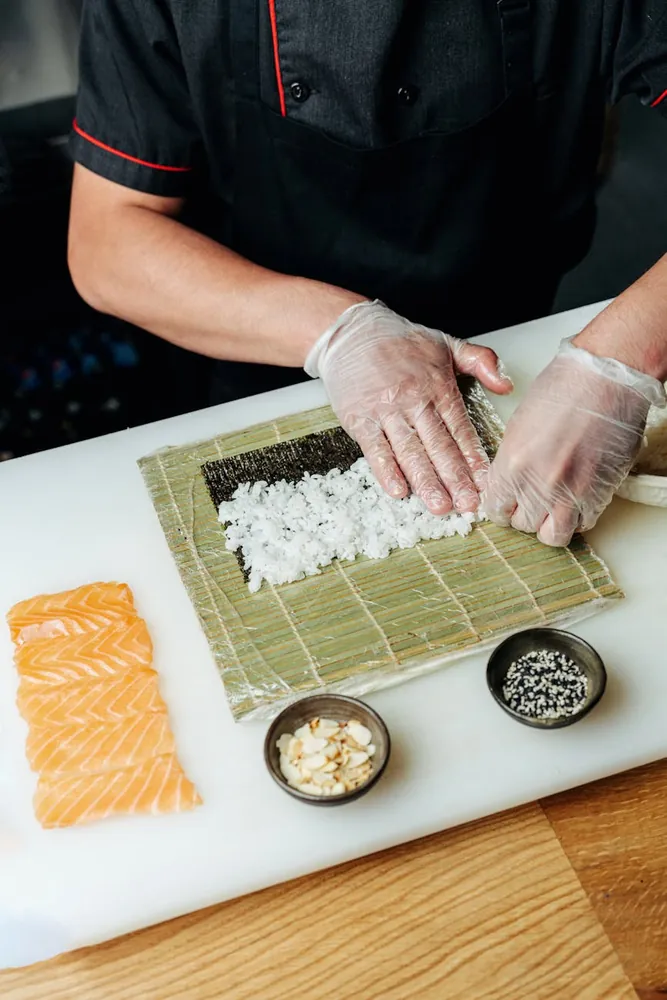
Place a sheet of nori on your bamboo mat with the shiny side down.
Dampen your fingers in water to prevent sticking and spread a thin layer of prepared sushi rice over the nori, leaving about an inch at the top free of rice.
Arrange your chosen fillings across the center of the rice layer. Be mindful not to overfill.
Using your bamboo mat, start rolling from the bottom edge. Roll tightly while applying gentle pressure until you reach the top edge.
Once rolled, let the sushi sit for a minute before slicing into pieces using your sharp knife. Clean your knife between cuts to maintain clean edges.
The Finishing Touch: Serving Your Sushi
Sushi is traditionally served with sides that enhance its flavor profile and provide a well-rounded dining experience. Consider including:
- Soy Sauce: For dipping your sushi. Choose low-sodium for a lighter option.
- Pickled Ginger: Acts as a palate cleanser between different types of sushi rolls.
- Wasabi: Adds heat; use sparingly if you're new to its intensity!
Troubleshooting Tips
If you're facing issues during your sushi-making process, here are some common challenges and solutions:
- If your rolls fall apart easily, check if you're using enough rice or not rolling tightly enough. Practice makes perfect!
- If your rice is too sticky or mushy, you might be overcooking it or not rinsing it enough before cooking. Adjust water levels accordingly next time.
Conclusion: Enjoying the Fruits of Your Labor
Molding ingredients into beautiful sushi rolls is as much about skill as it is about enjoyment and creativity. By mastering these essential techniques, you're well on your way to becoming proficient in crafting homemade sushi that could rival any restaurant offering. Don't hesitate to experiment with flavors and presentations to make each roll unique!